Home / Solutions / Packaging & Sealing Lines
Sealing & PackagingPackaging & Sealing Lines
Match sealer, film and product into one working line.
A sealer is only as good as the film and the product running through it. We work backwards from the pack: bag material and thickness, product weight and moisture, target packs per minute, then select between continuous band sealing, vacuum, or can seaming.
A sealing line is selected backwards from the pack, not forwards from the machine. Start with bag material and thickness, product weight and moisture, and the target packs per minute. Those three decide whether continuous band sealing, chamber vacuum or can seaming is workable before any model is discussed.
Packaging & Sealing Lines
The environment comes first, the machine second. Each item below changes the final selection.
Bag material and thickness
Decides whether a continuous sealer can form a reliable seal at all
Product moisture and particle size
Rules in or out external suction versus chamber vacuum
Target packs per minute
Decides manual, semi-automatic or inline configuration
Existing line and conveyor height
Decides whether the unit can be integrated or must stand alone
Constraint → specification
This is what the constraint actually turns into on a specification sheet.
| Site condition | Turns into |
|---|---|
| Dry product in a pre-made pouch | Continuous band sealer with matched film |
| Wet, powdery or sharp-edged product | Chamber vacuum, not external suction |
| Shelf-life extension is the goal | Vacuum with or without gas flushing, confirmed against the pack |
| Rigid cans | Can seamer matched to diameter, height and throughput |
Documents to request from a supplier
Not "is it certified", but which specific document, and who issues it.
- Recommended seal parameters for your film
- Seal width and jaw specification
- Throughput figures at the actual pack size
- Changeover and cleaning procedure
How this application commonly goes wrong
Described by type — no supplier is named.
Choosing on pack width alone, then finding the film will not seal reliably at the required speed.
Using an external vacuum sealer for a wet product, where liquid reaches the pump.
Ignoring conveyor height, so the machine cannot be placed inline and has to be re-handled.
Configurations for this application
Compared on one identical specification, not quoted separately.
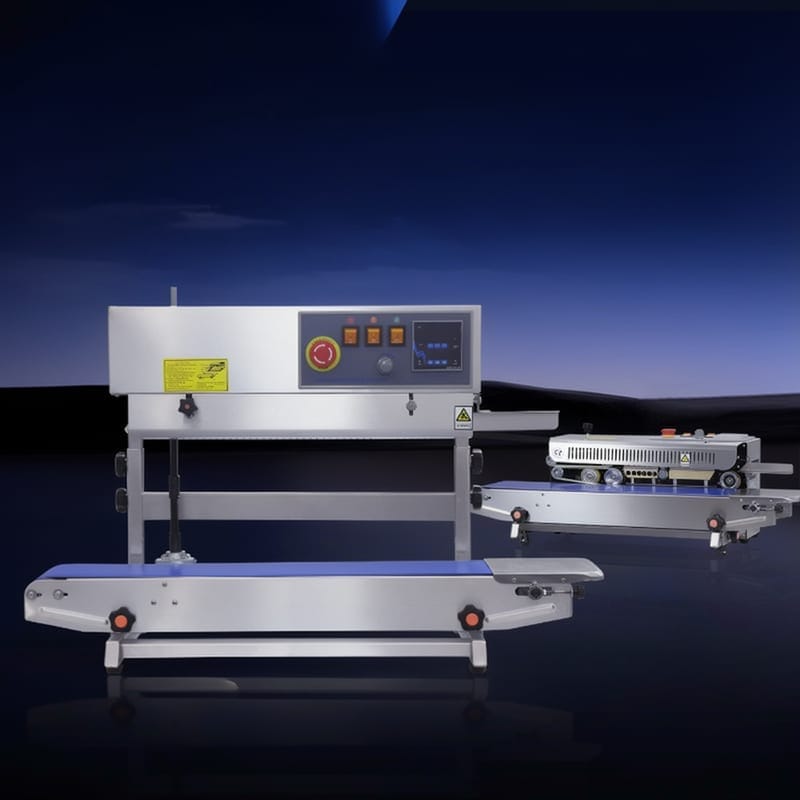
Vertical Continuous Band Sealer
Sealing & Packaging
3 supplier routes
View configuration →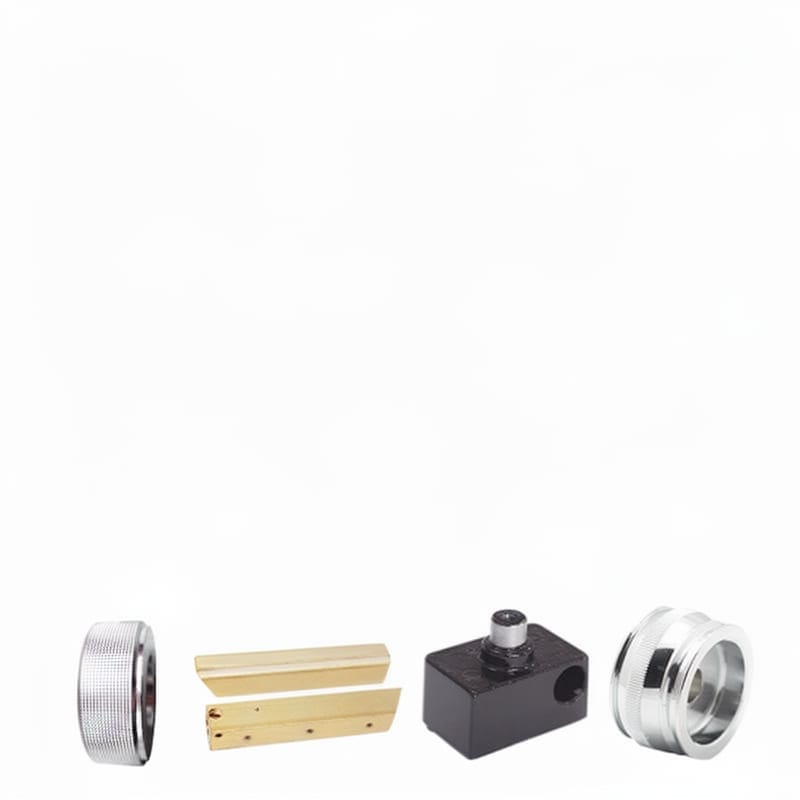
Continuous Band Sealer with Date Coder
Sealing & Packaging
3 supplier routes
View configuration →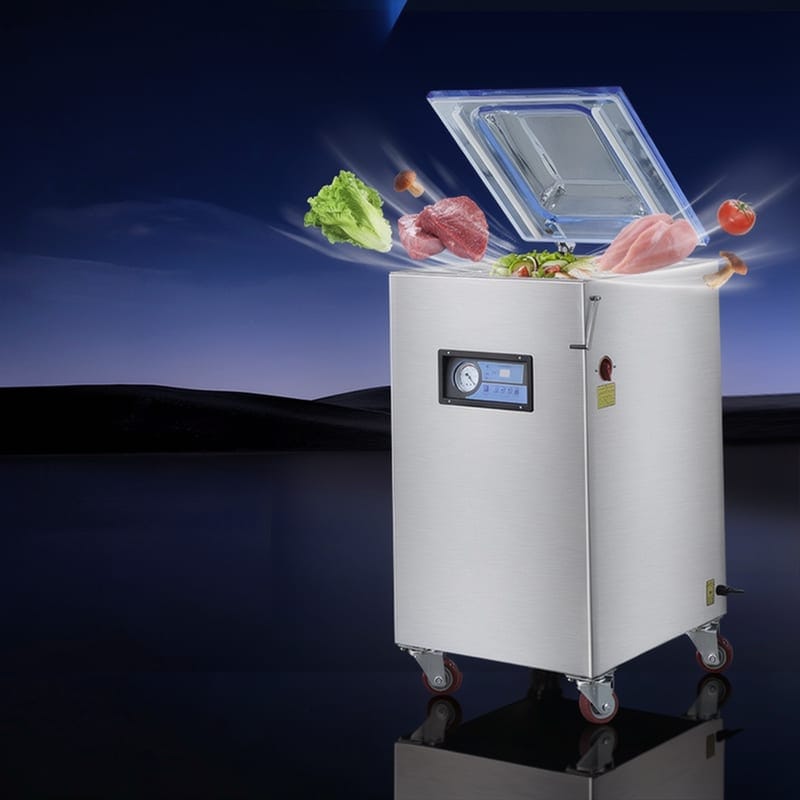
Chamber Vacuum Packaging Machine
Sealing & Packaging
7 supplier routes
View configuration →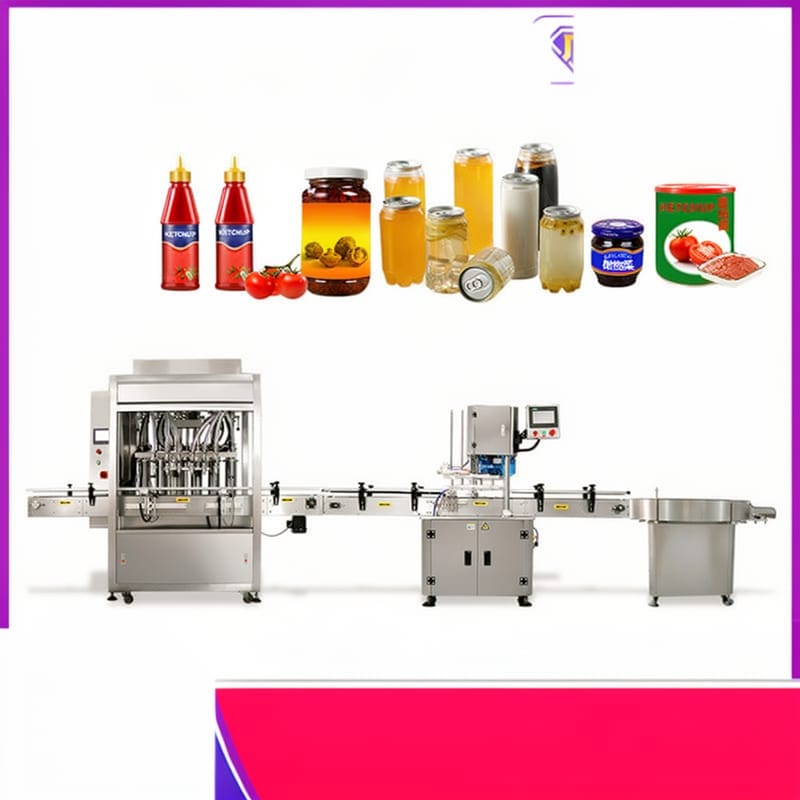
Liquid Filling Machine
Sealing & Packaging
8 supplier routes
View configuration →Common questions
Continuous band sealer or vacuum sealer?
They solve different problems. A band sealer closes a pouch; a vacuum sealer removes air to extend shelf life. If the product is dry and shelf life is not the driver, band sealing is usually enough. If moisture, oxidation or pack rigidity matter, vacuum is the route.
Can you match the machine to my existing film?
That is the right way round. Send the film specification — material, thickness, and whether it is laminated — and we will confirm whether the route can seal it, rather than selling a machine and hoping the film complies.
What output can I expect?
Output depends on pack size, operator loading speed and how the machine is fed, so a single figure would be misleading. We give you the throughput at your actual pack size and note what it assumes about feeding.
Do you supply the film and pouches as well?
Packaging bags and film are part of our sealing line, so they can be quoted together with the machine — which also means the seal parameters and the consumable are confirmed against each other rather than separately.
Send us the actual conditions
Ground, load, output, destination — those four settle which application this is and which questions matter.