Home / Comparisons / Chamber vacuum vs External (suction) vacuum
Chamber vacuum vs External (suction) vacuum
Choosing the wrong type here is one of the most common and most expensive mistakes in packaging equipment. Both are on our sealing line; this page is about which one your product actually allows.
Wet, powdery or liquid-bearing products need a chamber machine; external suction suits dry goods and simple pouches.
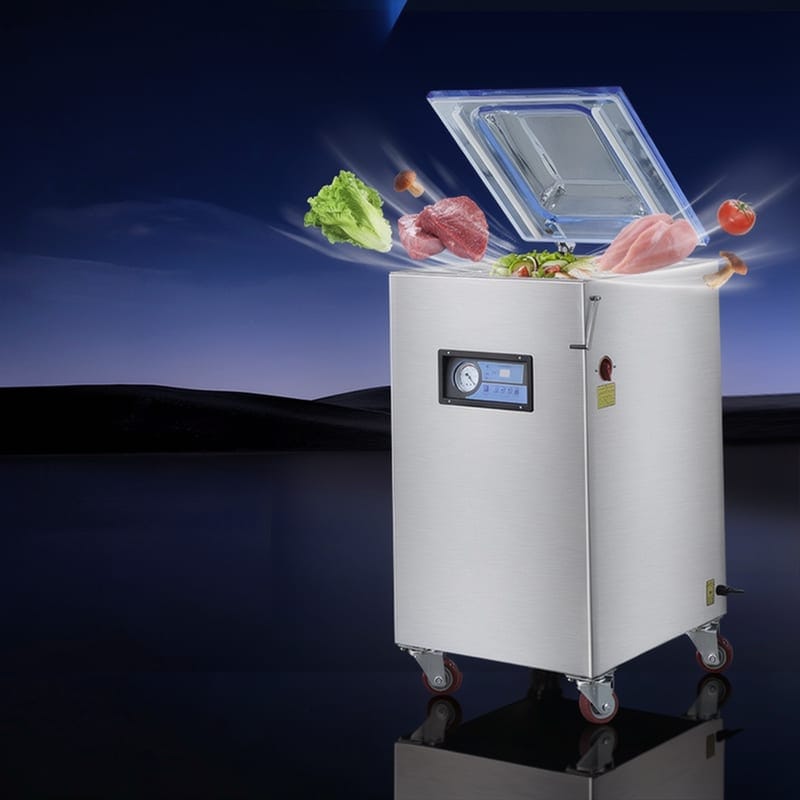
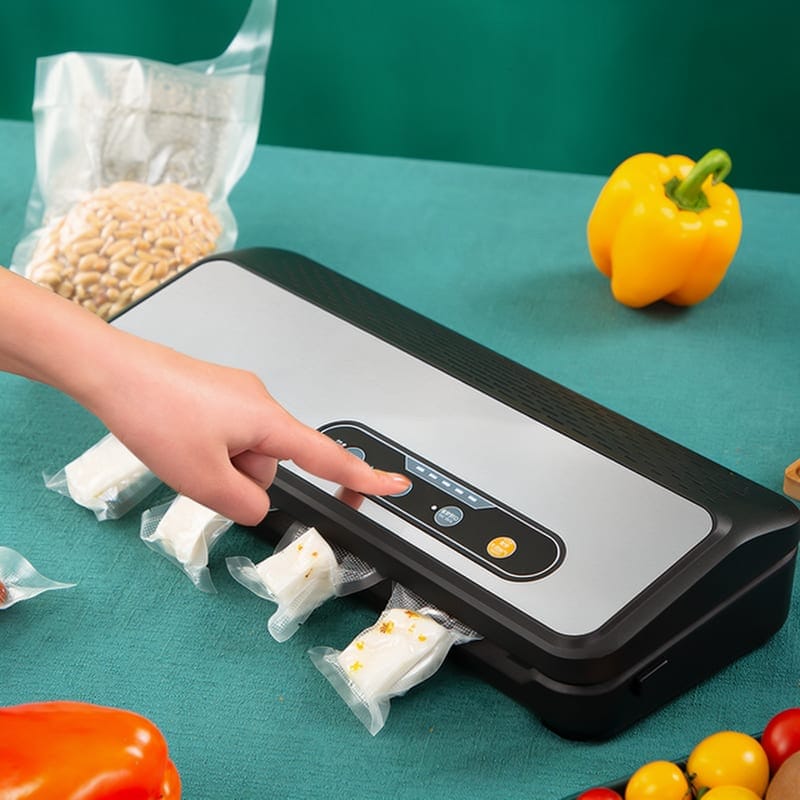
The difference is where the vacuum is drawn. A chamber machine places the entire pack inside a sealed chamber, so liquid cannot be pulled into the pump — which is why it handles wet and powdery products. An external suction machine draws air through the bag opening, so it suits dry goods and is simpler to operate.
Chamber vacuum · External (suction) vacuum
| Dimension | Chamber vacuum | External (suction) vacuum |
|---|---|---|
| How vacuum is drawn | The whole pack sits inside a sealed chamber | Air is drawn through the open bag mouth |
| Wet products | Handled; liquid stays in the pack | Not suitable; liquid can reach the pump |
| Powdery products | Handled without drawing powder out | Powder can be drawn into the machine |
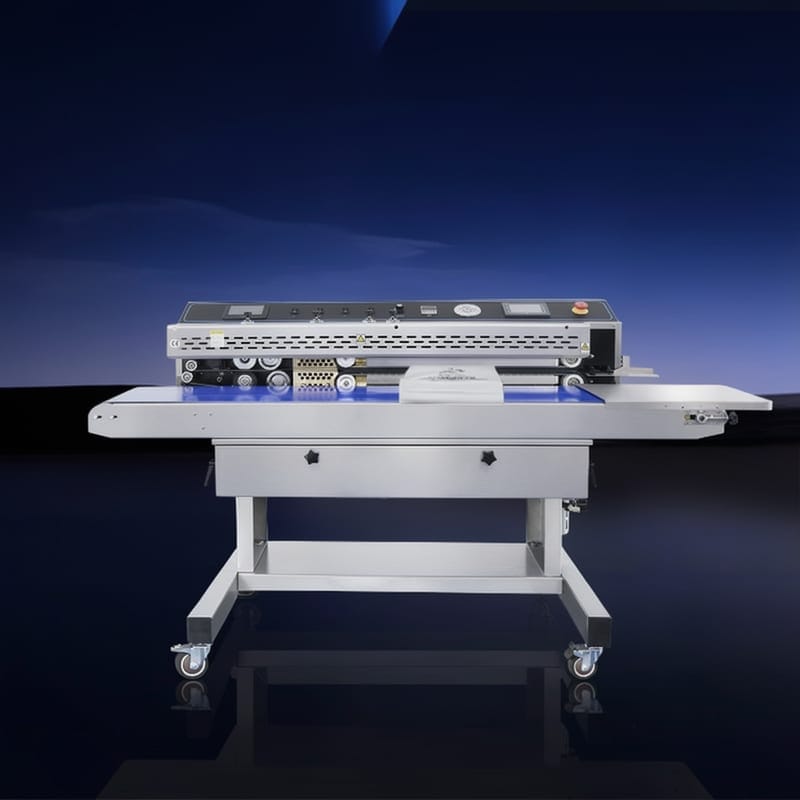
| Cycle pattern | Batch; chamber closes, evacuates, seals | Continuous or semi-continuous depending on the model |
| Pack types | Flat and shaped pouches, bags, some trays | Mainly flat pouches with an open mouth |
| Footprint and cost | Larger machine, higher cost | Smaller and simpler |
| Throughput | Per-cycle, governed by chamber size | Faster per unit on dry goods |
| Best fit | Meat, seafood, sauces, liquids, ready meals | Dry goods, hardware, textiles, simple retail packs |
Choose this when Chamber vacuum
- The product contains liquid or has high moisture
- The product is powdery or fine-grained
- You need a firm pack for freezing or transport
- Shelf life is the primary objective
Choose this when External (suction) vacuum
- The product is dry and free-flowing
- The pack is a simple flat pouch
- Footprint and machine cost are the constraint
- You need the simplest possible operation
Confirm before you order
Once these are settled, the choice usually stops being contentious.
- Product moisture content and whether it is liquid-bearing
- Bag or pouch dimensions and material
- Required vacuum level and cycle time
- Whether gas flushing is needed
- Chamber size against the largest pack
Related configurations
Common questions
Can an external vacuum sealer handle meat?
Not reliably. Meat releases liquid under vacuum, and in an external machine that liquid travels towards the pump. A chamber machine keeps the pack — and the liquid — inside the chamber.
Is a chamber machine slower?
It works in cycles rather than continuously, so per-cycle output depends on chamber size and how many packs fit in one cycle. For wet products there is no real alternative, so the comparison is not between the two types but between chamber sizes.
What vacuum level do I need?
It depends on the product and the target shelf life, and it has to be confirmed rather than assumed. Tell us the product and the intended shelf life and we will confirm what the route specifies.
Do I need gas flushing?
Only if the product needs it — for example to protect colour or structure. It is a separate configuration, so it has to be specified at the start rather than added later.
Other comparisons
Not sure which case you are?
Describe the actual conditions — load, site, destination — and we will place it and tell you which questions matter.