Home / Electric Forklifts / 3.5 ton
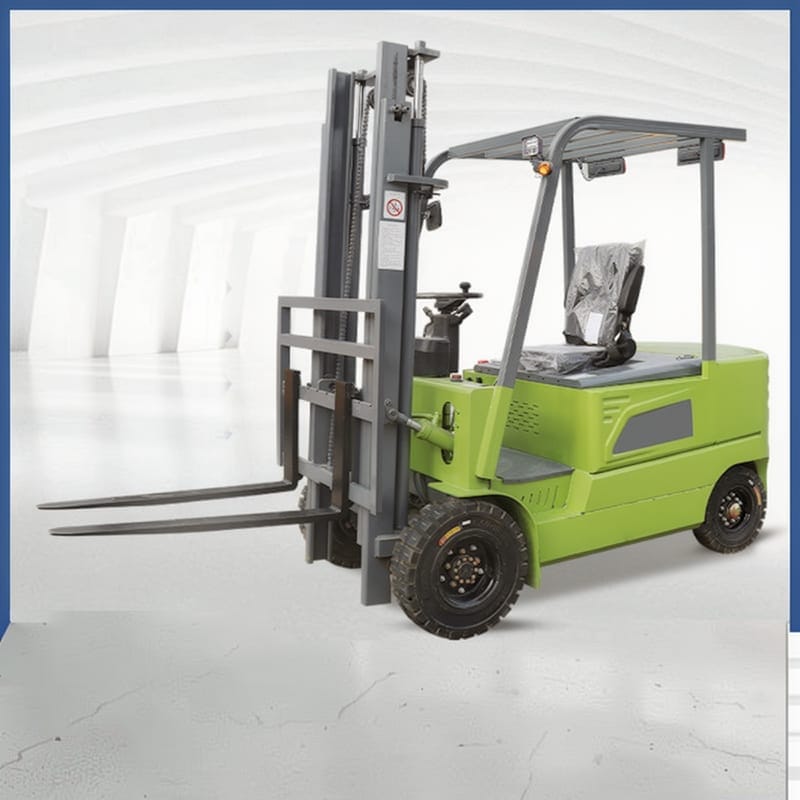
3.5 Ton Electric Forklift
Heavy indoor and semi-outdoor handling where a 3-ton class truck is at its limit but diesel is not wanted or not permitted.
A 3.5 ton electric forklift sits at the upper end of the electric counterbalance range. At this capacity the battery pack becomes large enough that charging infrastructure is a first-order design decision, and floor loading and aisle width have to be checked rather than assumed. Above this, a diesel route is often the more honest answer.
What is different at this capacity
| Footprint | Large; aisle and turning circle need checking |
| Battery | Large pack; charging capacity and time become design constraints |
| Typical duty | Heavy indoor or semi-outdoor work, often two shifts |
| Boundary | Above this class, diesel often becomes the practical route |
| Floor loading | Must be verified; this class concentrates significant load |
Choose this capacity when
- Loads sit between the 3-ton and 5-ton classes
- The site is indoor or semi-outdoor and combustion is not permitted or not wanted
- Charging capacity is available for a large pack
- Floor loading has been verified for the machine weight
Common misjudgements
Moving into this class without confirming the charging capacity available on site
Not verifying floor loading, which is a building constraint rather than an equipment one
Choosing electric where the duty cycle and site actually favour a diesel route
3.5 Ton Electric Forklift
| Rated capacity | 3,500 kg |
| Load centre | 500 mm (confirm per route) |
| Lift height | 3,000–6,000 mm, mast dependent |
| Fork length | 1,220 mm standard |
| Power | Electric, 60 V / 80 V class depending on route |
| Battery | Lead-acid or lithium; capacity confirmed per route |
| Charger | Included or optional — confirmed per route |
| Tyre | Pneumatic or solid depending on surface |
| Typical use | Dense industrial loads, container handling, heavy warehousing |
Values are reference ranges. The final specification is confirmed per supplier route against your actual application, and is not a commitment.
Common questions
Is a 3.5 ton electric forklift practical indoors?
It can be, where the building can carry it, the aisle allows it and the charging capacity exists. At this class those three checks matter more than the machine specification, because any one of them can make the machine impractical regardless of how good it is.
When should I choose diesel instead?
When the duty is long and outdoor, the ground is rough, or charging access is not realistic. Above this capacity the diesel and rough-terrain routes are often the honest answer, and we will say so rather than defaulting to electric.
What charging capacity do I need?
It follows from the battery pack size and your shift pattern, and it has to be worked out rather than assumed. A large pack may need a higher-output charger, a three-phase supply, or a longer charging window — or some combination. This should be settled at specification stage.
Other capacities
Not sure which capacity you need?
Send the load weight, load centre, lift height and aisle width, and we will place it in the right class.